






If you’ve ever shopped for ski gear, you’ll have noticed that Gore Tex is everywhere. And it’s often significantly more expensive than the option without it – so surely it’s a premium feature. Right?
While Gore Tex is undoubtedly an effective waterproofing and insulation membrane, do you really need to shell out (excuse the pun) on expensive Gore Tex branded attire?
What’s Actually in Gore-Tex
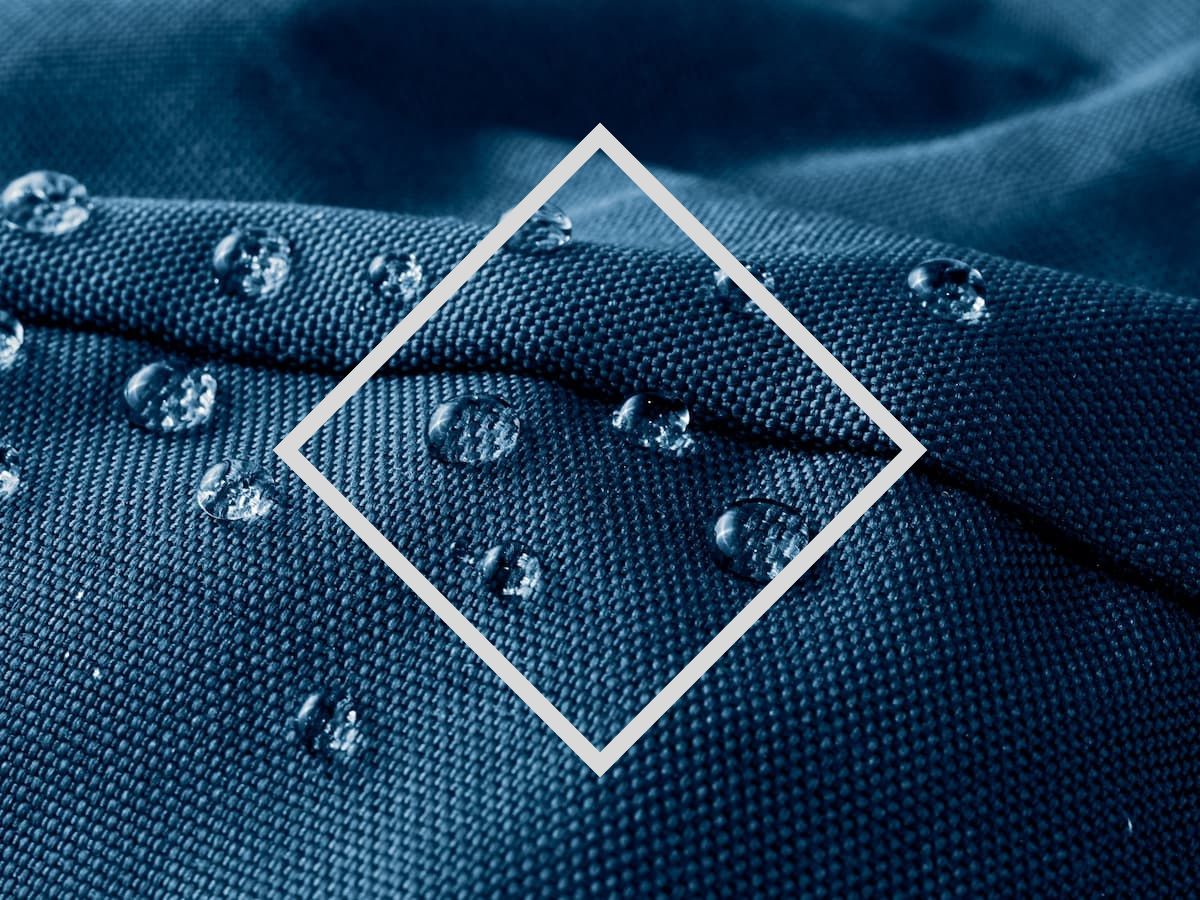
Gore-Tex is a synthetic coating added to clothing items to keep water out and enable a high functioning breathability. And yes, it does work and is highly durable and enduring. But, it works so well because the polymer that it’s made from is pretty much indestructible.

In fact, Gore-Tex’s original and still widely-used membrane, ePTFE, belongs to a family of chemicals called PFAS, or “per- and polyfluoroalkyl substances” – better known as “forever chemicals” because they don’t break down in the environment.
Since PFAS substances were invented in the 1930s they have been used widely in everything from non-stick frying pans to bulletproof vests and, of course, clothing. PFAS has also been found in water supplies, soil, and human blood worldwide, and in 2024 the US Environmental Protection Agency designated PFAS a hazardous substance under federal law – which is a real regulatory fact, not an allegation.
The Pollution Record
When it comes to environmental impact, PFAS, and the manufacturers of Gore-Tex, have a poor record.
Maryland’s state government filed a lawsuit against W.L. Gore & Associates in December 2024, alleging that at least 13 of the company’s 14 manufacturing facilities around the town of Elkton had contaminated local soil and water supply with PFAS for roughly 50 years. The suit accuses Gore of knowing about the toxicity and concealing it.
A separate federal class-action followed in February 2025, alleging Gore ran a deliberate greenwashing campaign. Gore-Tex in fact marketed itself as “Committed to Sustainability” and its laminates as “PFC-Free,” while continuing to manufacture with PFAS and failing to disclose that Gore-Tex fabric sheds PFAS into the environment through ordinary washing and wear.
One more crucial feature is that these are allegations in active litigation, not settled court findings. But the allegations which are hard to deny is that PFAS genuinely is hazardous and Gore-Text is complicit.
In Defence of Gore-Tex
In fairness, Gore has been moving away from PFAS – basically because they’ve had to. Since 2022 they’ve rolled out a new membrane called ePE, and by 2025 they say all their new “next-generation” products are made “without intentionally added PFAS.” Most major partner brands such Arc’teryx, Patagonia and Mountain Hardwear have now transitioned their Gore-Tex lines to it.
But looking closely at that wording… “without intentionally added PFAS” is not the same claim as “PFAS-free.”
Gore’s own site adds the caveat that products “may contain trace amounts.” And the transition only started in 2022 and only completed years later, well after mounting lawsuits and incoming EU and US legislation aimed squarely at banning PFAS in textiles.
This reads a lot less like environmental leadership and a lot more like a company being dragged, reluctantly, toward doing the minimum once the legal and regulatory cost of not doing it got too high. Not so cool.
None of that undoes 50 years of alleged pollution around their factories in the US. And for years, Gore sold “next-gen” PFAS-reduced products alongside legacy PFAS-based ones with no clear way for a shopper to tell the difference, which is precisely what the class action alleges was the point.
The Gore-Tex Badge Tax
As a buyer though, the environmental impact isn’t usually the deciding factor in purchase decisions. It’s price.
But Gore doesn’t just make a fabric, it licenses it. Brands pay to use the Gore-Tex name and must meet Gore’s own testing standard, the “Guaranteed To Keep You Dry” promise. That licensing cost gets baked into the retail price of every jacket carrying the badge separate entirely from how the fabric actually performs on the mountain.
And it shows. Gore-Tex garments routinely retail at a significant premium,, while jackets built on arguably better alternative membranes are often cheaper. Even though real world performance doesn’t justify the Gore Tax price hike.
Does Gore-Tex Perform Better Than Other Membranes?
Here’s where the “gold standard” claim gets shakier still. Gore-Tex Pro carries an impressive 28,000mm+ waterproof rating, and yes that is genuinely excellent. But that spec is built for expedition and mountaineering use most resort skiers, or even backcountry skiers, will never come close to needing.
If you’re going heli-skiing in Alaksa, or splitboarding the Alps across open terrain, then yes you might want to consider Gore-Tex. But if you’re spending a week or two in a resort, it might just be overkill.
For context, the industry generally rates anything above 20,000mm as waterproof under very high pressure – heavy, wet snow included.
| Membrane | Waterproof / Breathability | Type | DWR |
| Gore-Tex Pro (ePE) | 28,000mm+ | Microporous | PFAS-free* (asterisked) |
| Dermizax NX | 20,000mm / 40,000g | Non-porous PU | Varies by brand |
| H₂No (Patagonia proprietary) | 20,000 / 20,000 | Non-porous PU | PFAS-free |
| Picture DryPlay (Utility) | 20,000 / 20,000 | Non-porous PU | PFOA/PFOS-free |
| Dope DRYTECH | 15,000mm / 15,000g | Non-porous TPU | PFAS-free |
Looking at the tech specifics. Gore-Tex is a microporous membrane – physically full of microscopic holes small enough to block liquid water but let vapour escape.
My current jackets both use hydrophilic (non-porous) membranes instead, no physical holes at all, moisture moves through by diffusion rather than pores. The trade-off is genuinely two-sided: non-porous membranes can’t get clogged by dirt or body oil the way porous ones sometimes can over time, though the very best microporous options still lead on raw breathability during extreme, high-output effort. For a normal day of resort skiing or riding, that gap is close to irrelevant.
15,000-20,000mm is comfortably enough to survive anything a standard ski day throws at you. Both of my jackets sit exactly in that range, and Dermizax NX, a genuine, widely available Gore-Tex competitor, actually out-breathes Gore-Tex Pro on paper while being significantly cheaper.
My Actual Experience
I’ve worn my Picture Organic Styler and Dope Adept through proper Alpine storms and grim UK rain, and neither has ever let water through. Both ship with PFAS-free DWR treatments as standard, years ahead of Gore completing its own transition. That’s the real-world version of everything above: smaller brands got to “PFAS-free” faster than the company whose entire reputation is supposedly built on performance and trust.
What to Actually Look For Instead
Skip the badge and check the numbers instead:
- Hydrostatic head (mm) — the actual waterproof rating. 15,000mm+ is genuinely enough for resort skiing and snowboarding.
- Breathability rating (g/m²/24h) — higher is better for high-output days.
- Fully taped seams — non-negotiable regardless of membrane brand.
- DWR treatment — check specifically whether it’s PFAS-free. Increasingly, smaller brands are ahead of Gore here, not behind.
Summing Up
Gore-Tex is genuinely a top performing membrane, but it’s not the only option and it might not even be the best. In fact for 95% of skiers and snowboarders out there, it’s an unnecessary feature that you don’t need in your ski wear, and likely wouldn’t notice anyway.
Yes, in terms of environmental responsibility, Gore’s newer ePE membrane is a real, meaningful improvement over what came before. But “meaningful improvement” isn’t the same as “gold standard,” and it definitely isn’t the same as “worth the premium.”
You’re paying largely for a name that’s spent the last two years playing catch-up on the exact issue, PFAS pollution, that smaller, brands had already solved. For most skiers and snowboarders, that badge is buying you very little you can’t already get, cleaner and cheaper, elsewhere.