



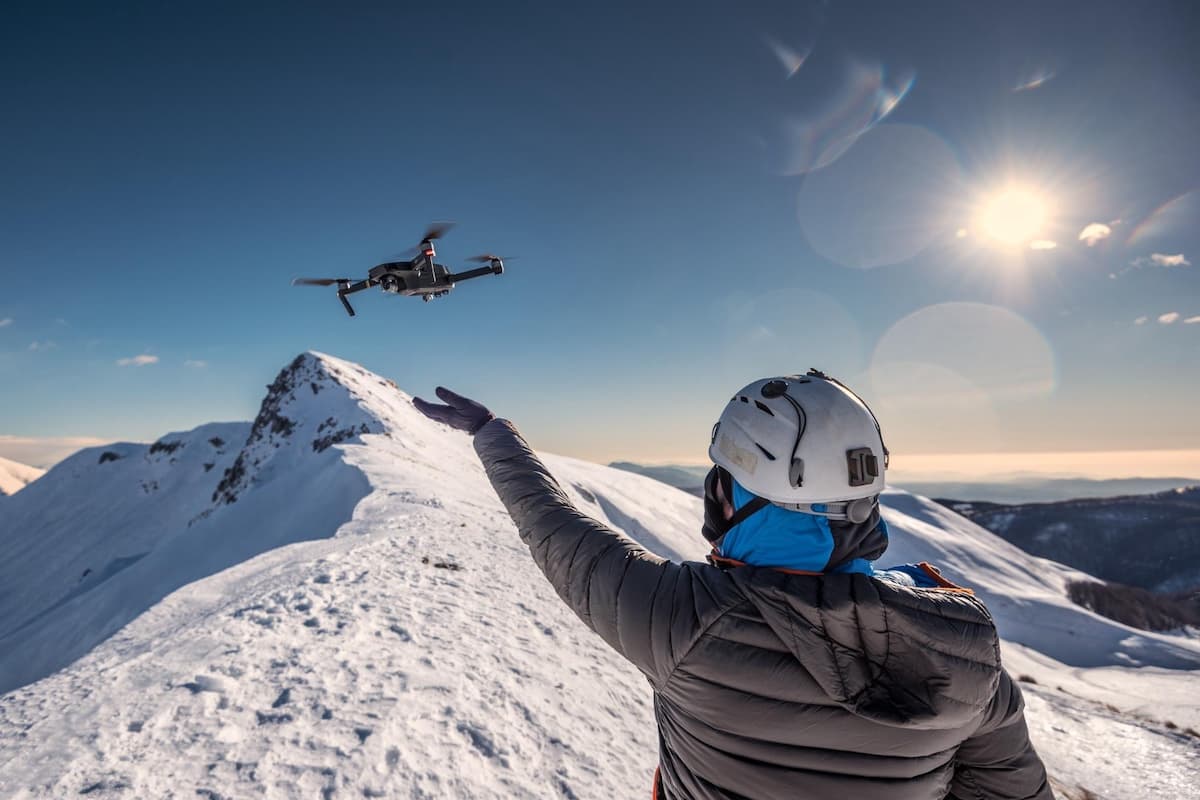
If you’ve caught any of the Winter Olympics this year then you can’t have missed the fact that drone footage is a big deal. And while a done used to be either a fun toy or a piece of serious hardware for filmmakers, they have become a much more accessible option for the rest of us.
In fact, as the prices have moved solidly into the budget sphere, and as more user-friendly technology has emerged, the options for drones for skiers have truly exploded.
In fact, in 2025 we saw the rise of the palm-launched drone – most notably from Hoverair and DJI, with their X1 and Neo drones (more on those very shortly). But even more than simple follow me drones, we’ve moved away from bulky controllers toward autonomous, AI-driven flight that lets you focus on your line rather than a joystick.

The market for the best ski drones currently on the market has become complex, with more options than ever. Ranging from ultra-portable “selfie” drones to high-end cinematic tools that can follow you at professional speeds – which one should you be packing into your day pack for the next ski trip?
Before we continue, just a quick shout. There are affiliate links in this post, which just means we may earn a commission if you click and buy at no extra cost to you. Cheers 😉
What features do you need for ski drones?
When picking a drone for ski or snowboarding footage, you’ll want to make sure that you’re packing the most cutting edge features. Generally speaking, the following elements are all key features which are essential when choosing a good ski drone.
They are:
- Follow-me technology: As it sounds, this is the clever trick where the drone locks onto a specific person or object (ie; you) and follows them both physically and with the camera. This tracking feature is vital for autonomous drone flight, enabling the drone to follow skiers and snowboarders without requiring manual control.
- Obstacle avoidance: You don’t wanna be smacking into trees or people in chairlifts, right? Hence, the ability to detect, avoid, and navigate around obstacles is crucial for ensuring safety while flying in a mountainous environment.
- Stability: Look for a drone that responds well to windy conditions and can maintain its altitude for seamless filming. Essential for those mountain breezes – which can be pretty harsh even when they’re kinda sedate.
- Flight time: Longer flight times mean more time to film, capture highlights, and create an engaging video. Older drones used to have 20 minutes flight time max – these days you can get close to an hour.
- Image and video quality: High-resolution cameras and top-notch image stabilization technologies are essential to create crisp and smooth footage. Be warned that some budget drones cut corners on this front – so pay attention to the image quality.
- Ease of use: Intuitive controls and user-friendly features make it easy for those new to drones to operate them, and advanced settings allow professionals to fine-tune performance. Flying a drone takes some getting used to though, so don’t assume you’ll buy a drone today and be flying it around Chamonix by the weekend.
Bonus key feature:
- Weight: A drone under 250 grams means there are less restrictions on licences under some some local laws. However as of 2026, this has changed in the UK and all drone owners are now required to get a flyer ID and, for all of the drones on our list, an operator ID, More on this below.
On a final point, most of our picks here are foldable drones, or compact drones. Having a compact and foldable drone means you can easily slip it into your ski rucksack, without needing to put the machine together as that biting cold freezes your fingers.
Palm launched vs traditional drones
The new category of pocket sized and palm launched drones has opened up the possibilities for ski drones in 2026. And while they are certainly very cool and deliver some great results, there is still a case for the traditional controller-led drones.
To summarise quickly, before we get onto our list of the best ski drones…
If you want quick video of you and your friends messing around on the mountain, the odd selfie (dronie as they’re called with these things) and maybe some fun with some tracking footage at a relatively slow speed then look at the palm launched drones.
If you value higher quality footage and you don’t mind taking the time to control the drone then you’ll prefer the more controlled-led drones. These might be useful if you’re doing semi-pro filming or if you simply want more quality footage.
The best ski drones for 2025/26
These are our picks of the best drones in no particular order for the current winter season.
DJI Neo 2
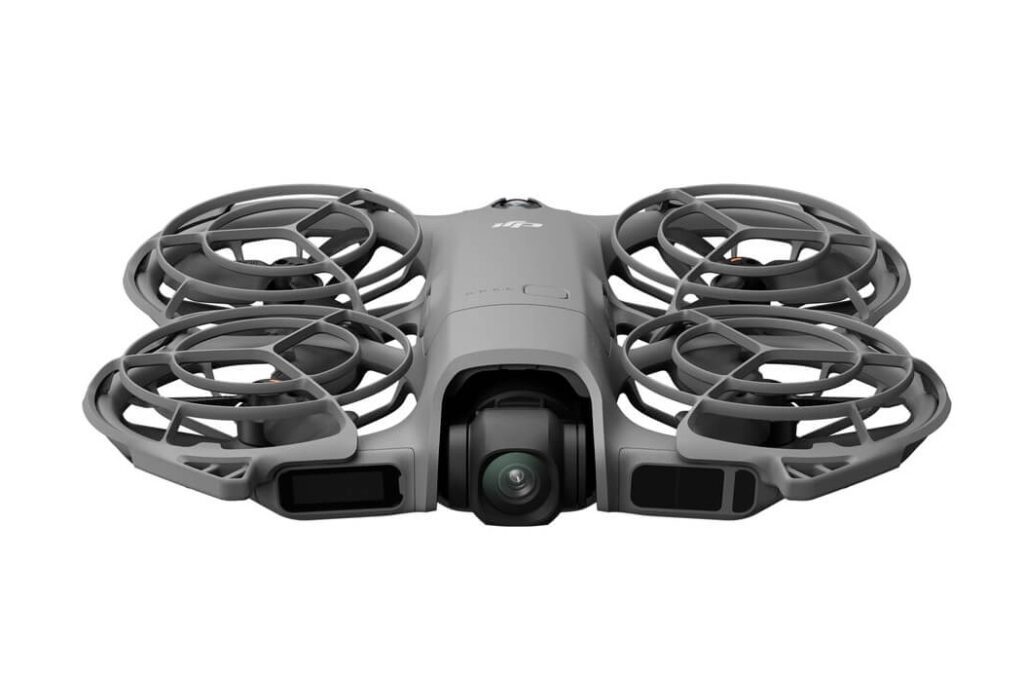
DJI entered the “palm-launch” market with their original Neo, and the recently released Neo 2 has refined the formula for winter sports. The Neo 2 is essentially a tiny, rugged flying camera that weighs next to nothing. The big upgrade here is the integration of LiDAR sensors and improved wind resistance.
On the slopes, the Neo 2 is noticeably quieter and faster than the original. It can now follow at higher speeds, making it much more viable for snowboarding or skiing. The inclusion of palm-takeoff means you never have to take your gloves off to get the drone in the air – you simply select a mode on the drone itself and let it fly.
Will it keep up with you at Olympic speeds? No. But if you’re cruising on or off-piste, you can definitely get some unique footage.
And… For the price, the DJI Neo 2 is the most affordable and accessible way to get 4K footage of your turns.
- Camera Spec: Upgraded 4K at 60fps for smoother action playback.
- Tracking: Advanced AI Subject Tracking with LiDAR and binocular vision sensors for improved accuracy in complex terrain.
- Flight Time: Up to 19 minutes of flight time.
- Wind Resistance: Level 5 rating (up to 10.7m/s), a significant jump for a drone of this size.
- Return to Home: Precision GPS-based Smart RTH with obstacle sensing.
- USP: Palm-sized and palm-launch capable, meaning you can get it in the air without taking your gloves off to use a remote.
- Cons: Short flight time compared to the Mini series; small sensor size can struggle in flat light.
Price: £209 (Drone only)
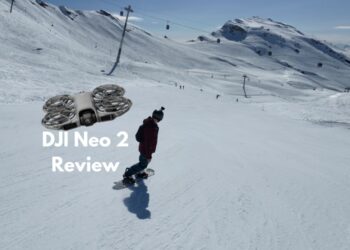
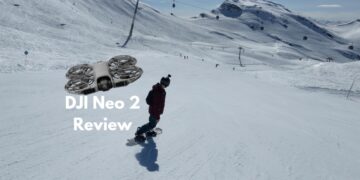
Check out my full DJI Neo 2 review or watch the test run, snowboarding down a quite fast run in Switzerland.
HoverAir X1 Pro & Pro Max
The HoverAir X1 Pro and its more powerful sibling, the Pro Max, are arguably the most important drones for skiers this year. Unlike traditional drones, these feature a “cage” design that makes them incredibly durable and safe to launch while moving on-piste.
The Pro Max is the standout choice for the mountains. It features a dedicated Winter Combo which includes Thermo batteries designed to maintain voltage in temperatures as low as -20°C. It can track at speeds up to 42 km/h, which is plenty for carving red runs, and the Pro Max version even includes rear-facing vision sensors to help it avoid obstacles while it follows you down a tree line.
If you want 8K resolution and the best follow-me logic on the market, this is it.
- Camera Spec: Professional-grade 8K at 30fps or 4K at 120fps for high-quality slow motion.
- Tracking: Advanced high-speed tracking (42km/h) with vision-based rear collision detection.
- Flight Time: 16 minutes (extended by cold-weather optimized batteries).
- Wind Resistance: Level 5; highly stable even on exposed ridges.
- Return to Home: Smart return features with vision-assisted landing.
- USP: The only drone in this category offering 8K resolution and 4K slow motion in a fully enclosed, “crash-proof” cage.
- Cons: Premium price point compared to the standard Pro and DJI Neo models.
Price: Around £599 for Hoverair Pro Max
HoverAir X1
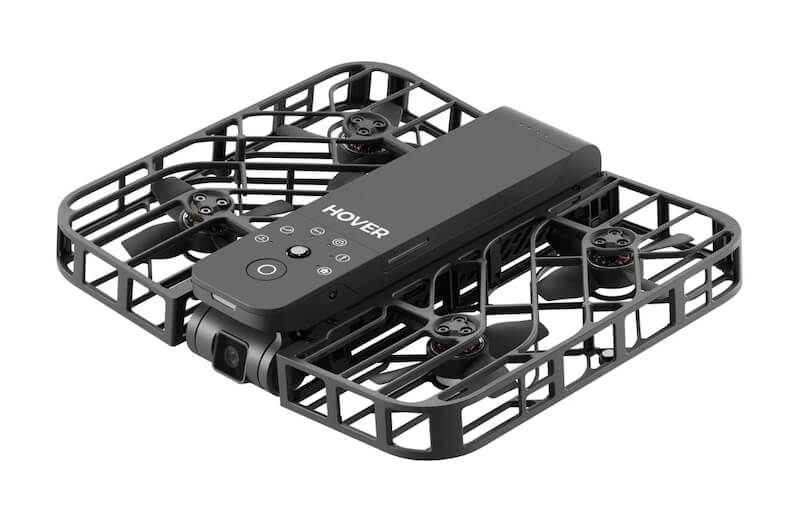
The original HoverAir X1 remains a fantastic budget entry point. It is incredibly light and folds up to the size of a smartphone. While it lacks the high-speed tracking and 4K/60fps capabilities of the Pro models, it is perfect for casual holiday vlogging and slow-paced powder stashes.
Its main limitation on the mountain is wind resistance; on a blustery ridge, the X1 will struggle, but for a sunny day in the trees, it is an very cool and useful tool.
- Camera Spec: 2.7K at 30fps; designed for casual vlogging.
- Tracking: Five pre-programmed flight modes including Follow, Orbit, and Overhead.
- Flight Time: Approximately 11 minutes.
- Wind Resistance: Level 4; struggles in high Alpine winds.
- Return to Home: Simple return to palm functionality.
- USP: Ultra-portable folding design that fits in a goggle case.
- Cons: Lacks 4K resolution; very short battery life; no obstacle avoidance sensors.
Price: original Hoverair drone now around £270
DJI Neo
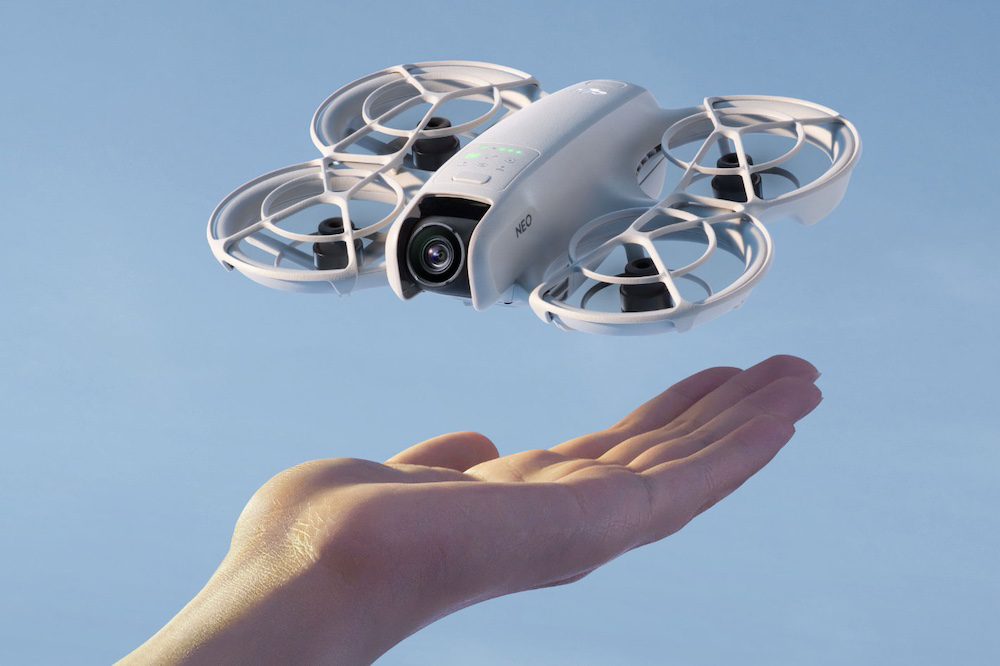
The original palm-launched drone from DJI was a hit, in fact so much so that the company have quickly launched a new DJI Neo just over a year after the first one was released. But despite the upgrade, the original DJI Neo remains a good option for skiers and snowboarders looking for an affordable and fun selfie drone. Especially now that the price has come down.
Now I have had some fun with my own DJI Neo and I found it was significantly improved by the addition of the N3 controller. The reason for this is that the drone does lag a bit when following you on the slopes, so you can’t quite smash out a crazy line and expect it to keep up. If you’re riding through the park though, this should be a good option.
By using the controller you can effectively follow someone at a faster speed and with more control, which makes for much better ‘Olympic-style’ ski follow footage.
If you’re looking for the best option in terms of chasing you down the hill then go with the DJI Neo 2. But if you want a budget friendly follow-me ski drone that is a lot of fun then the original DJI Neo is a great option.
- Camera Spec: 4K at 30fps with single-axis mechanical gimbal and electronic stabilization.
- Tracking: Reliable AI subject tracking for following at moderate skiing speeds.
- Flight Time: Approximately 18 minutes.
- Wind Resistance: Level 4 (8m/s); best used on calm bluebird days or in sheltered tree runs.
- Return to Home: Standard GPS Return to Home functionality.
- USP: The lightest and most affordable entry into the DJI ecosystem for quick, autonomous social media clips.
- Cons: No obstacle avoidance; 30fps limit isn’t ideal for high-speed action playback.
Price: You can find original DJI Neo from around £160
DJI Flip
The DJI Flip is a brand-new design for 2025 that sits between the tiny Neo and the more serious Mini series. It features a unique folding mechanism where the props stack vertically, making it exceptionally narrow when packed.
For skiers, the Flip is a “safety-first” drone. It has enclosed propellers which are a huge advantage if you are filming around other people on a busy piste or if you are worried about catching a branch.
It shoots beautiful 4K/60fps HDR video and features a 1/1.3-inch sensor, which is essential for capturing detail in high-contrast snowy environments. In fact if you’re looking for the best of the palm launched ski drones, this one might be the best choice for you.
Another great feature is the solid battery life, which outperforms most of the other drones on here. And despite being a little less compact than the smaller Neo or Hoverair models, this is still a great bag to pull out and launch in seconds not minutes. The slightly hardier battery and wind resistance also makes this our top pick of the best ski drones on this list….
- Camera Spec: 4K at 60fps HDR with a high-performance 1/1.3-inch CMOS sensor.
- Tracking: Dedicated Subject Tracking modes that function without a remote controller.
- Flight Time: 31 minutes, offering significantly more “on-mountain” time.
- Wind Resistance: Level 5; handles typical mountain gusts with ease.
- Return to Home: Advanced Smart RTH that finds the safest path back to the user.
- USP: A unique folding “cage” design that protects the propellers while still allowing for 31 minutes of flight.
- Cons: Slightly bulkier when folded than the Neo or X1 series.
Price: Currently on sale on Amazon for £266
DJI Mini 4 Pro & Mini 5 Pro
The DJI Mini series remains the gold standard for image quality in a sub-240g package. The Mini 5 Pro is the latest flagship, featuring a 1-inch sensor – a first for a drone this small. This larger sensor is a game-changer for skiing because it handles the glare of the sun on white snow much better than smaller sensors, preserving detail in the highlights.
The Mini 5 Pro also introduces omnidirectional LiDAR-based obstacle avoidance. Traditional vision sensors can sometimes be “blinded” by the flat light on a cloudy day or the intense reflection of a bluebird day. LiDAR doesn’t have this problem, making the Mini 5 Pro the safest drone to fly through complex terrain or tight couloirs.
- Camera Spec: Mini 4 Pro (4K/60fps); Mini 5 Pro (4K/120fps with a massive 1-inch sensor).
- Tracking: Industry-leading ActiveTrack 360 for complex, cinematic follow-shots.
- Flight Time: 34 to 52 minutes depending on battery choice.
- Wind Resistance: Level 5 (Mini 4) / Level 6 (Mini 5).
- Return to Home: Advanced Omnidirectional RTH that navigates around obstacles.
- USP: The Mini 5 Pro’s 1-inch sensor and LiDAR avoidance make it the most powerful tool ever fitted into a sub-250g drone.
- Cons: Higher price point; requires a remote controller for best results (less “instant” than the Neo or X1).
Prices: Between £489 and £869 depending on model/package
DJI Mini 4K
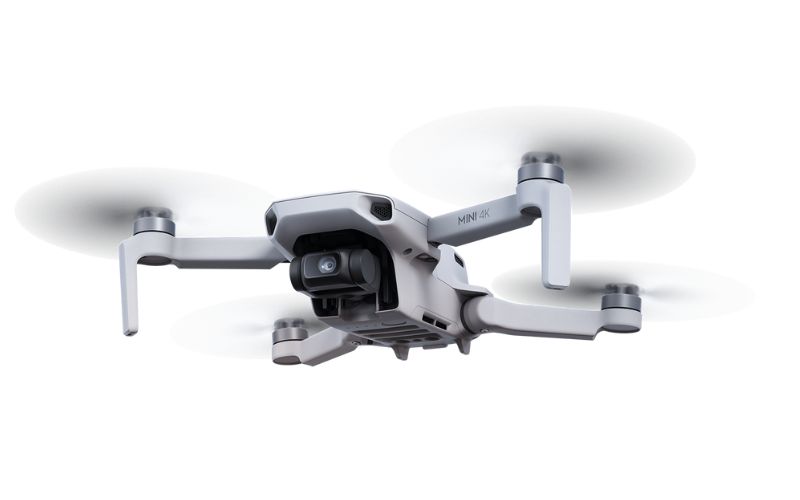
If you don’t need the fancy obstacle avoidance or the highest-end sensors, the DJI Mini 4K is the best value drone you can buy. It uses the older, reliable DJI airframe but still shoots high-quality 4K video.
It is a “pilot’s drone” – you will need to fly it manually to get the best out of it – but for a budget-conscious skier who wants reliable DJI performance without the four-figure price tag, it is unbeatable.
- Camera Spec: High-bitrate 4K at 30fps with a 3-axis mechanical gimbal.
- Tracking: Lacks active AI follow-me; relies on “QuickShots” for automated movements.
- Flight Time: 31 minutes of airtime.
- Wind Resistance: Level 5 (up to 38kph).
- Return to Home: Reliable GPS-based RTH with a dedicated “Home Point” update.
- USP: The most affordable way to get stabilized, 3-axis 4K footage from a global leader in drone tech.
- Cons: No active subject tracking (Follow Me) and no obstacle avoidance sensors.
Price: Currently a bargain £215 on Amazon UK!
Potensic Atom 2
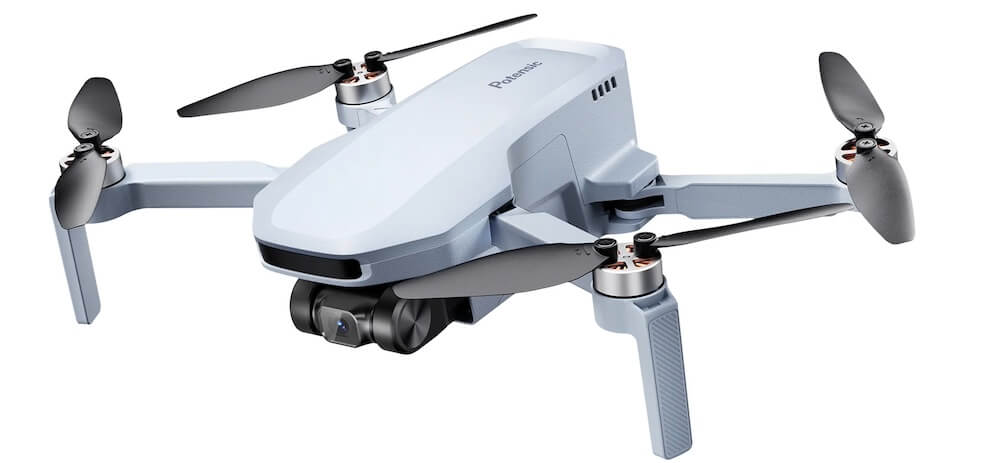
The Atom 2 is a significant jump forward for the brand. It features a 3-axis gimbal and a 1/2-inch Sony sensor that produces surprisingly sharp 4K video.
Most importantly for skiers, Potensic has significantly improved their AI tracking. While it might not be quite as “sticky” as DJI’s ActiveTrack 360, the Atom 2 can reliably follow a skier on open terrain.
It is a great middle-ground for those who want a “real” drone with a remote but don’t want to pay the DJI premium.
- Camera Spec: 4K at 30fps HDR using a Sony 1/2-inch sensor.
- Tracking: “Visual Tracking” AI that can lock onto a skier and maintain framing.
- Flight Time: 32 minutes per battery.
- Wind Resistance: Level 5; very stable in moderately windy conditions.
- Return to Home: Fast-searching GPS RTH with high accuracy.
- USP: Offers a “Dynamic Home Point” which updates the return location to your current position as you ski down the mountain.
- Cons: No obstacle avoidance; tracking is less reliable in “busy” terrain with lots of trees.
Price: Currently £238 on Amazon
Potensic Atom SE
The Atom SE is the bare-bones version. It lacks a mechanical gimbal, relying instead on electronic stabilization. On the mountain, this means the footage won’t be as “buttery” as the other drones on this list, especially if it’s windy. As far as ski drones go, this is a wild card budget option – but to be honest we think you’d be better off with something like the original DJI Neo or one of the cheaper DJI models such as the Mini 4k.
The reason to get the Potensic SE is that it’s one of the most durable and cheapest 4K drones available. If you are a beginner who is terrified of crashing an expensive DJI into a lift pylon, the Atom SE is a low-risk way to start. Camera quality is also pretty good, so if you want to capture great footage on a low budget then this is a good place to start.
- Camera Spec: 4K at 30fps with “ShakeVanish” electronic image stabilization.
- Tracking: Basic GPS-based “Follow Me” (follows the remote controller, not the visual subject).
- Flight Time: 31 minutes.
- Wind Resistance: Level 5.
- Return to Home: Standard GPS-assisted return.
- USP: An incredibly lightweight and durable “beater” drone for those who want 4K without the high cost of DJI.
- Cons: No mechanical gimbal (leads to less smooth footage); no obstacle avoidance; tracking is less precise than visual-based systems.
Price: Get Potensic Atom SE for £188 on Amazon
TL;DR: Which ski drone should I buy?
Want a hands free option with the best obsctacle avoidance tech and decent battery life? Choose the DJI Flip.
Want a complete drone with the best camera quality and technically advanced features such as AI tracking, obstacle avoidance and broader usability off the mountain? Choose the DJI Mini 5 Pro.
Want a budget friendly ski drone that will capture excellent content either in the park or cruising gently down the mountain? Choose the DJI Neo 2 or Hoverair Pro Max.
Should you use a drone or action camera for skiing/snowboarding?
A drone and an action camera offer two very different styles of video. While the new Insta360 style camera do offer some amazing follow me style footage, a drone gives you a completely different perspective. You can get that truly birds-eye angle, and even that follow me footage looks unique compared to the camera.
There is still no real replacement for a helmet or selfie-stick mounted camera. For first person footage, that is still the best play. But if you want to capture more of your ski trip then a drone is a solid addition to your camera selection.
Do you need a licence to fly a drone in a ski resort?
There is no blanket rule about flying drones in ski resorts, as the rules differ from country to country. One thing to bear in mind is that in most European countries, such as Austria and France, you’ll need a licence to fly a drone over 250 grams over a public area (such as a ski resort). The drones on our list here are all under this weight limit so you should be able to fly without additional licences or training.
For most European ski resorts, as a general rule:
- Ensure you do not fly over public buildings.
- Do not fly higher than 150 metres from the ground.
- In Austria there are rules about public privacy, so be careful if you are filming other people (for example at an event).
- Keep the drone within eyesight.
- Do not fly over military installations, airports or other civic buildings.
- In France and Switzerland, you’re not supposed to fly over pistes or wherever there are lifts – so be wary of this too.
If your drone is over 250 grams then you should get the EU drone licence, which is also valid in Switzerland and other non-EU nations. This costs around €125 and is usually ‘success guaranteed’.
Honestly though, there are some excellent ski drones well under the 250 gram weight limit – and so long as you’re discreet you shouldn’t get into any trouble. Obviously avoid flying your drone into people, chairlifts or ski schools and you’ll be all good…
Ski drone footage best practice
To avoid getting in trouble when using your drone, follow these simple pieces of advice:
- Avoid using your drone around lifts and gondolas.
- Shoot footage only of yourself or people in your party.
- Definitely don’t shoot footage of ski schools or kids, unless you have everyones permission to shoot and use the footage.
- Avoid obstructing ski runs when setting up and flying your drone – aim to be off the main areas to minimise disruption.
If you’re thinking of getting a drone as a gift, check out our article: Gifts for skiers and snowboarders – or our guide to ski gadgets.