




While skiing and snowboarding are great fun, they aren’t without risk. And one of the big fear risks is the avalanche. These waves of snow can be devastating and may sweep down a mountain decimating anything in their path.
In December 2023, we’ve seen horrible news of a mother and son from the UK who were killed in an avalanche in France. And while this news is undoubtedly sad and shocking, this might cause many people to worry about the implications and risks to their own ski trip.
Yes, avalanches are a worrying potential problem. But do you need to worry about them, and what can you do to avoid them, or stay safe if hit by the unexpected?

How Common Are Avalanches?
Avalanches are relatively common, with an estimated over 1 million happening worldwide every year. Of course, most of these occur in uninhabited mountain regions and don’t affect people. But there are also thousands of avalanches reported in and around ski resorts, with 100,000 affecting US ski areas.
Typically, between 150-200 people die in avalanches annually worldwide, and about half of those deaths occur in the European Alps. The majority of avalanche deaths worldwide do affect skiers and snowboarders, which, if you’re reading this, is probably a bit of a worry.
But, while these statistics are alarming, it’s crucial to put it into perspective.
Avalanches claim one life for every million ski days, which is significantly lower than other risks linked with outdoor activities in wilderness settings.
For context, the most deaths attributed to skiing and snowboarding are collisions with other riders, or objects. An estimated 135,000 are injured due to snow sports every year in the US. Stats suggest that the chances of dying while skiing is 1 in 1.4 million, while for snowboarding, it is 1 in 2.2 million.
Of course, each life lost is a tragic event. But the tiny proportion of people affected by ski resort based avalanches highlights that this is often a freak occurence rather than the norm.
In fact most avalanche deaths occur either off-piste or in parts of the resorts which have not been managed or groomed (usually closed off sections of ski resorts).
Ski resorts in Europe (and world wide) are big business, and so safety is a top priority for ski area operators. The main pistes in ski resorts are usually monitored and groomed regularly, significantly reducing avalanche risks. In contrast, off-piste areas do not benefit from these managed protections mean they’re more exposed to natural hazards, making them more avalanche-prone.
While heading off-piste is definitely a thrilling part of a ski holiday, skiers and snowboarders venturing off-piste do need to be adequately prepared, understand the risks involved, and take necessary precautions.
Read our guide: How to enjoy off-piste and freeriding
Do Avalanches Affect the Main Pistes in Ski Resorts?
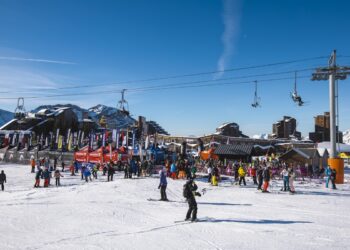
Avalanches, like most natural phenomena, are indiscriminate, but their occurrence is significantly influenced by the terrain’s characteristics. The well-groomed, patrolled slopes (also known as pistes) of Alpine ski resorts are routinely checked, controlled, and secured against avalanches. Potential triggers are pre-emptively addressed often using controlled detonations to set off smaller avalanches under safe conditions, hence limiting the risk on the piste.
You’ll often head the boom of avalanche prevention explosions after heavy snowfall, and in many resorts, areas will be closed off if there is a high risk of avalanches. You’ll usually also see the risk of avalanche status at the base station and in the ski resort.
However, off-piste areas, backcountry trails, or other unsupervised wilderness terrains do not benefit from such defences. These areas, characterized by steeper terrains and heavy snowfall, are, unfortunately, more susceptible to avalanches.
This is why the majority of deaths by avalanche occur either in freeriders or ski tourers (study).
How Can I Avoid Avalanches?
Though avalanches may be prevalent, that doesn’t mean they’re inevitable. Here are a few tips to reduce your avalanche risk when skiing or snowboarding:
- Understand the Risk: Familiarise yourself with the day’s avalanche forecast and its implications. The European Avalanche Warning Services (EAWS) is a valuable tool for assessing daily risks across the Alps.
- Know Your Terrain: Steeper slopes (between 30 and 45 degrees) are the most vulnerable to avalanches. Knowing the incline, the orientation of your route, the snow pack’s stability, and the weather conditions can help avoid hazardous areas.
- Stay on Piste: As a general rule, the open pistes should be safe and clear of avalanche risks. However if the worst should occur, they are also monitored by safety teams meaning that help should be on the way rapidly in case of a freak avalanche.
- Training and Equipment: If you’re planning to do a lot of off-piste or backcountry riding, consider a basic avalanche safety course. Also make sure to equip yourself with a transceiver, shovel, and probe – the essential survival kit for any off-piste adventurer. You can pick up relatively inexpensive avalanche safety kits on Amazon.
What Can I Do to Stay Safe If Affected by an Avalanche?
Despite our best efforts, sometimes nature has other plans. And if you do find yourself venturing off piste accidentally (it can happen), you might want to know how to handle an avalanche in the worst instance. These are some simple safety tips to stay alive in the event of an avalanche:
Move Sideways: Try to escape the path of the avalanche by moving horizontally to the slide. At the time this might seem tricky, but if you can get away from the main body of the avalanche, to the preiphery, you can potentially escape the worst impact.
Ditch Your Gear: Shed your gear to make yourself lighter and increase the chances of staying above the flow of snow.
Swim: Make swimming motions to stay afloat and maintain position close to the surface.
Air Pocket: If possible, create an air pocket around your mouth as the snow settles. This can also mean that you can shout for help.
Stay Calm: As with any emergency, staying calm and focused can be key to survival.
Get in Touch: If you can reach or operate your mobile phone, use it to alert someone as soon as possible. This might not always be an option, as being packed in the snow can make it hard to move – and you may not have a signal. But having the opportunity to send an SOS could, obviously, save your life.
In Summary
While avalanches do happen in the Alps and across the world’s ski resorts, they are very rare and affect a tiny percentage of the skiing public. You can minimise your risk of being affected by avalanches by staying on-piste, paying attention to avalanche warnings and carrying an avalanche beacon if you plan to spend a lot of time off piste.
This article does contain some affiliate links. This just means that we may earn a commission if you click and buy via them, at no extra cost to you.