


Following on from the summer closure of the glaciers in Zermatt and Hintertux, Europe’s final summer ski glacier at Passo Stelvio has temporarily closed.
Italy’s Passo Stelvio was the final holdout in what has been a brutal summer for European glacier resorts. All summer skiing operations have been suspended as of Saturday, August 15.
While this isn’t the first time Stelvio has closed, this closure marks a grim milestone: the complete, if (hopefully) temporary absence of outdoor summer snowsports across the entire Northern Hemisphere.

In a candid statement posted to the resort’s website, lift operator SIFAS called the decision “painful but necessary,” citing relentless heatwaves, severe surface-degrading storms, and a complete lack of overnight refreezing at high altitudes.
“These factors make it impossible to guarantee the usual standards of quality and, above all, of safety required for summer skiing,” the operator noted.
While the cable cars will remain open for sightseers and hikers, the ski slopes will stay closed until further notice.
A Sign of the Times
This is not the first time Stelvio has closed during the summer months due to heatwaves. Operations were also suspended in 2003, 2015, 2017 and 2022 to protect the glacier ice from degradation during hot periods.
However, this is the first time that all of the summer skiing resorts have been suspended at the same time. While this is an anomaly year, the likelihood is that with the effects of a warming climate, this is going to be a common occurrence in coming years.
Receding glaciers are a challenge for ski resort operators across the Alps, and minimising melt during the summer months is becoming more of a losing battle.
A Rapid Domino Effect Across the Alps
Stelvio’s shutdown completes a rapid cascade of closures that has swept through the Alps over the past few weeks:
- Les 2 Alpes (France): Wrapped up its early morning-only summer session back in July.
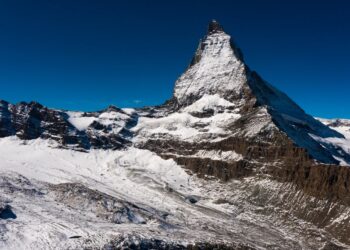
- Zermatt-Cervinia (Switzerland/Italy): Suspended public summer skiing in early August after warm nights melted the upper layer of the Theodul Glacier.
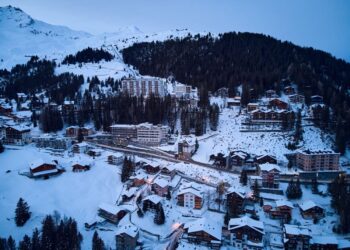
- Saas-Fee (Switzerland): Halted its summer ski operations on August 10 as zero-degree freezing levels spiked toward 5,000 meters.
- Hintertux (Austria): Opted out of operating through the peak heat of August entirely this year.
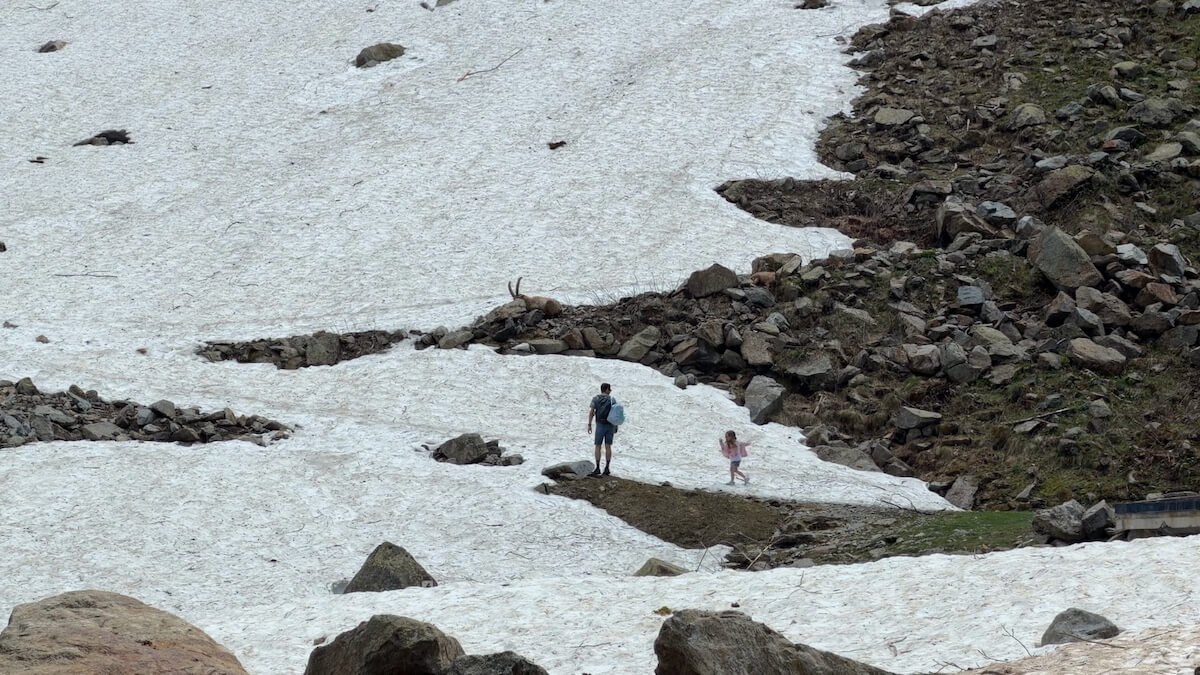
The issue plaguing these iconic high-altitude venues isn’t just blistering daytime heat; it’s also the lack of overnight recovery. Without freezing temperatures at night, the snowpack turns to unmanageable slush, exposing bare blue ice, open crevasses, and loose rock debris.
What Makes Stelvio Different?
Unlike Alpine neighbors such as Zermatt or Saas-Fee, Stelvio is an anomaly in the ski world; it operates exclusively as a summer ski resort. Heavy snowpack blocks the notoriously winding mountain pass every winter, forcing the resort to stay closed from November to late May.
Because the summer months constitute Stelvio’s entire operational season, it is usually the last resort standing, holding out long after traditional winter areas call it quits.
To have Stelvio pull the plug mid-August underscores just how unprecedented this period of heatwaves in Europe has been.
Will the Slopes Reopen Before Autumn?
Resort management is actively monitoring high-altitude temperatures and weather patterns. If a cold snap brings a fresh layer of snow and stabilizes the glacier surface, SIFAS hopes to resume skiing later in the season.
However, weather analysts suggest that a realistic recovery will likely require waiting until mid-to-late September, when autumn weather systems typically begin to take hold.
For now, race teams and die-hard summer powder chasers looking for outdoor turns have only two options: book a long-haul flight to the Southern Hemisphere or head indoors.
Read more: How will El Niño Affect Winter 2026/27